
A few stray curls of metal under a CNC machine rarely stay a minor housekeeping issue for long. Left in walkways, around moving parts or mixed with cutting fluid, swarf quickly becomes a safety risk, a contamination problem and a source of unnecessary downtime. If you are looking at how to remove metal swarf in a working industrial environment, the right answer depends on the material, the volume, the presence of oil or coolant, and how often the waste is generated.
In most sites, the mistake is not failing to clean swarf at all. It is relying on methods that are slow, inconsistent or unsafe. Brushing dry metal fragments by hand can spread fines into surrounding areas. Compressed air can push sharp particles into machine internals or operator walkways. General-purpose vacuums often struggle with abrasive material, hot debris or mixed waste streams. A better approach starts with understanding what you are handling and matching the removal method to the process.
Why metal swarf needs a planned removal method
Metal swarf is not just a cleaning by-product. It is a production waste stream with real operational consequences. Sharp turnings can cause cuts and puncture injuries. Fine metallic dust can contaminate sensitive processes and create housekeeping failures. When swarf mixes with lubricants or coolants, floors become slippery and waste handling becomes more complex.
There is also the issue of machine performance. Swarf that builds up around guards, conveyors, extraction points or coolant return areas can interfere with normal operation. On high-output lines, even a short interruption to clear accumulated waste can affect throughput. That is why removal should be treated as part of the process, not an afterthought once the shift has finished.
The right system also depends on the material itself. Aluminium swarf behaves differently from steel. Fine stainless particles are not the same as long, spring-like turnings from machining operations. Wet swarf brings another layer of handling and disposal requirements. A method that works well in a light fabrication area may be wholly unsuitable in a heavy engineering plant.
How to remove metal swarf in different conditions
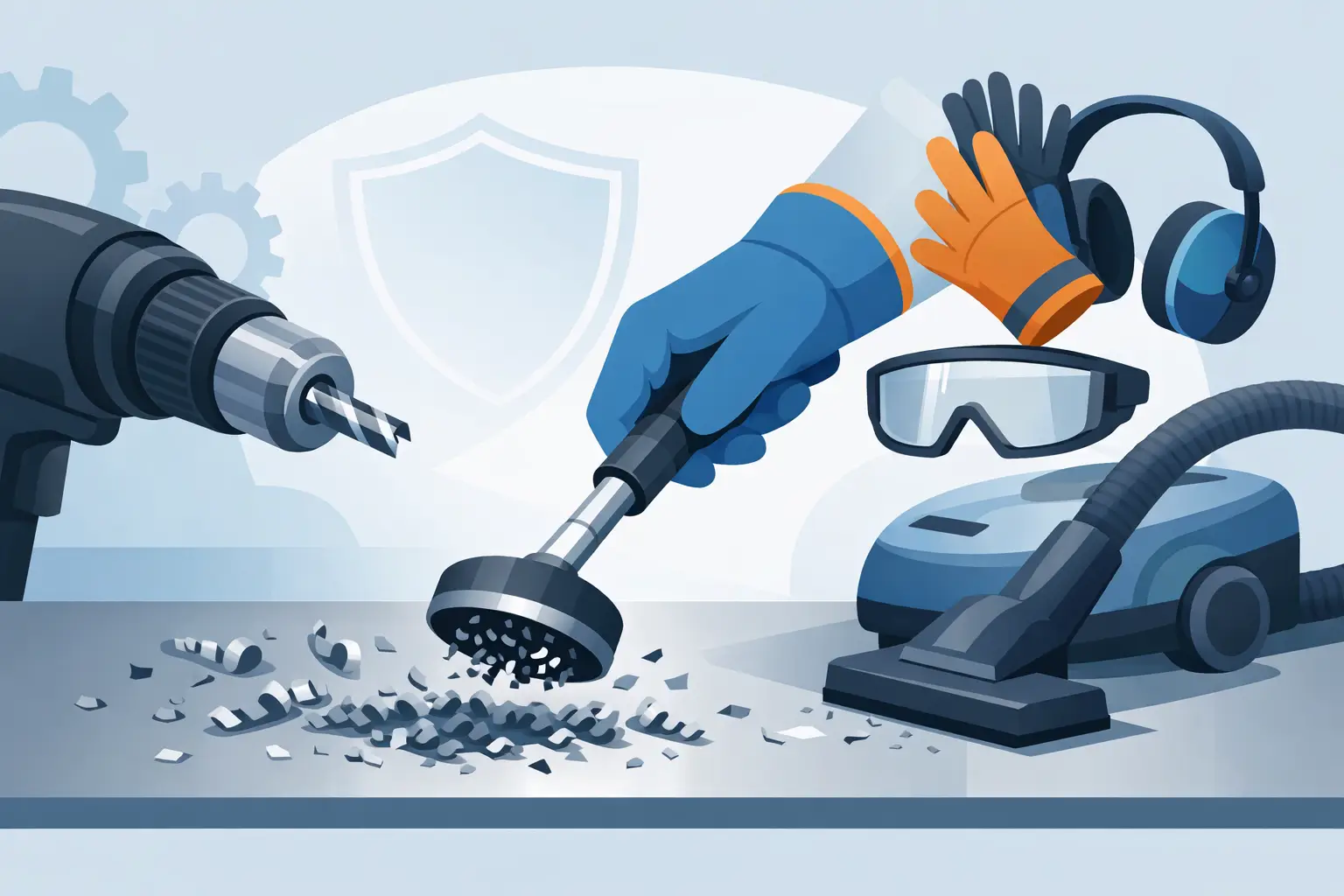
The most effective way to remove metal swarf is usually industrial vacuum extraction, but the setup needs to match the waste profile. For dry, fine or loose swarf around machine tools, a heavy-duty industrial vacuum gives controlled collection without scattering debris. It reduces manual handling and keeps the waste contained from collection point to disposal.
Where swarf is mixed with coolant or oil, wet and dry industrial vacuum systems are often the better choice. These are designed to recover solids and liquids together or to separate them, depending on the application. That matters if you want to reclaim fluid, reduce disposal volume or keep machine sumps and surrounding floors clear without switching between multiple pieces of equipment.
For large quantities generated continuously, portable cleaning alone may not be enough. In those cases, a fixed or centralised vacuum system can make more sense. It allows operators to remove swarf at source or at planned cleaning points across the facility, without dragging smaller machines between work areas. On larger manufacturing sites, this can improve consistency and reduce labour time spent on routine clean-downs.
Manual tools still have a place, but mainly as a controlled support method. Scrapers, rakes and specialist handling tools can help move heavy accumulations or long turnings into a collection zone before vacuuming. What should be avoided is direct hand contact or ad hoc sweeping that simply shifts the problem elsewhere.
Methods to avoid when removing metal swarf
If the priority is safety and containment, some common habits are worth challenging. Compressed air is one of the biggest offenders. It may appear fast, but it often drives sharp fragments into inaccessible areas, spreads fine particulate into the wider workspace and increases the risk of eye and skin injuries.
Domestic or light commercial vacuums are another poor fit. Metal swarf is abrasive, heavy and often sharp enough to damage filters, hoses and containers not designed for industrial use. Once oil, coolant or hot residue enters the mix, the limitations become even clearer. Equipment built for office or janitorial duties is not engineered for machining waste.
Sweeping is also limited. On smooth floors with light, dry debris it may remove the visible material, but it tends to leave fines behind and can push fragments into expansion joints, drains and corners. In production environments where cleanliness, machine uptime and operator safety matter, that is rarely good enough.
Choosing the right equipment for swarf removal
When deciding how to remove metal swarf efficiently, the starting point is volume and type. Fine dust and short chips require different airflow and filtration characteristics from dense, heavy turnings. Wet swarf needs a machine that can tolerate liquids and abrasive solids without rapid wear.
Container capacity matters as well. If operators are stopping every few minutes to empty a collection drum, cleaning becomes inefficient and often gets postponed. Equally, a machine that is too large or awkward for the access available around machine tools may not be used properly. The best fit is not simply the biggest unit. It is the one that matches your layout, waste profile and cleaning frequency.
Filtration and separation should not be overlooked. Fine metallic particles can challenge standard filtration systems, while mixed waste may require staged separation to protect the machine and simplify disposal. In some environments, especially where combustible dust or hazardous zoning is a concern, ATEX-certified options may also be required. That decision should be based on a proper site assessment rather than assumption.
Forvac Industrial works with sites that need exactly this kind of practical match between waste type, operating conditions and vacuum performance. In swarf handling, the detail matters. A system that is technically appropriate from the outset will usually outperform a cheaper stop-gap approach over the longer term.
Safe handling matters as much as collection
Knowing how to remove metal swarf is only part of the job. Operators also need a safe handling routine around the cleaning process. Personal protective equipment should reflect the material and task. Cut-resistant gloves, eye protection and suitable workwear are basic safeguards where sharp metal fragments are present.
Housekeeping procedures need to be clear and repeatable. If swarf is produced continuously, waiting for visible build-up is rarely the best trigger for action. Scheduled removal at set intervals often works better, particularly around machining cells, maintenance bays and fabrication areas where waste accumulates predictably.
Collection containers should also suit the waste. Overfilled bins containing sharp turnings are difficult to move and awkward to empty safely. Segregating dry swarf, wet swarf and contaminated waste can make downstream disposal easier and may support recycling or fluid recovery efforts. The goal is to avoid turning one cleaning problem into a manual handling problem further down the line.
Disposal, recycling and site efficiency
Once collected, metal swarf still needs to be managed properly. In many facilities, swarf has recoverable value, particularly when it is segregated by metal type and kept relatively free from excess contamination. Poor collection methods can reduce that value by mixing materials or introducing debris from surrounding floors and work areas.
Fluid content is another factor. Swarf saturated with coolant or oil is heavier, messier and more expensive to handle. Where separation is possible, recovering fluid can reduce waste costs and improve housekeeping. It may also support broader site targets around material efficiency and environmental control.
This is where removal method links directly to productivity. Cleaner machines, safer floors and controlled waste streams are not just maintenance wins. They support smoother operations, fewer interruptions and a more professional working environment overall.
Building a better swarf removal process
If your current approach relies on brushes, shovels and reactive clean-ups, it is worth reviewing the process more formally. Look at where swarf is generated, how far it travels, whether it is dry or wet, and how often operators need to intervene. Then assess whether the cleaning equipment in use is genuinely designed for that duty.
In some plants, the answer will be a mobile industrial vacuum for localised cleaning around machines. In others, it will be a higher-capacity wet and dry unit, or a centralised system that supports multiple operators and production areas. There is no single correct answer for every site, which is why swarf removal should be specified around the application rather than bought on convenience alone.
A well-designed solution does more than remove visible debris. It reduces risk, shortens cleaning time and helps keep production areas operating as they should. That is usually the point where swarf removal stops being a recurring frustration and starts becoming part of a cleaner, safer and more efficient process.
